


What were the key developments in Data and Artificial Intelligence this month?
September showed how quickly the enterprise AI landscape is expanding beyond models and applications. As organizations scale AI, attention is increasingly turning to the infrastructure, security, and regulatory conditions needed to support it. In Europe, this is driving investment across the AI technology stack while raising new questions around cybersecurity, technological sovereignty, and the environmental impact of growing computing demand.
This month’s developments reflect these priorities. A reported data breach involving an AI agent highlights new security challenges, while European initiatives are strengthening regional AI infrastructure and semiconductor capabilities. At the same time, the rapid expansion of data centers is putting energy and water efficiency under greater scrutiny, reinforcing the need to balance Europe’s AI ambitions with security, resilience, and sustainability.
1. Spanish data watchdog receives first AI agent-linked data breach report
Spain’s data protection authority has received what it describes as its first notification of a personal data breach allegedly carried out using an AI agent. According to the organization that notified the regulator, the agent used a widely known large language model to identify vulnerabilities, gain access to a system, and independently search for additional weaknesses. It later modified personal data and accessed invoices.
The case provides an early example of how agentic AI could change the cybersecurity landscape. Unlike conventional generative AI tools that primarily respond to prompts, AI agents can perform sequences of actions with greater autonomy. The Spanish regulator emphasized that the case remains under review and does not indicate that the underlying AI model or its provider was compromised. A single incident also does not establish a broader trend.
Why it matters for your business
As AI agents become more capable, organizations need to consider them from both sides of the cybersecurity equation. Agents can support security teams and automate business processes, but similar capabilities could also be used to accelerate vulnerability discovery and attacks. Strengthening access controls, monitoring unusual automated activity, and including agentic AI in existing cybersecurity and risk management frameworks will become increasingly important.
Read more.
2. Europe launches its first major cross-border AI project
Nineteen EU Member States have joined forces to design the first Important Project of Common European Interest dedicated specifically to artificial intelligence. Coordinated by Germany, the initiative aims to develop shared AI services and strengthen Europe’s AI value chain, from technology development to business adoption.
The project is intended to cover the entire AI technology stack, including computing infrastructure, AI technologies, industrial applications, and services. Eleven participating Member States that plan to provide public funding to companies involved in the project are beginning the initial approval process with the European Commission.
Why it matters for your business
Europe’s AI strategy is increasingly moving from regulation and policy toward infrastructure and industrial deployment. For European businesses, initiatives that expand regional AI capabilities could create additional options for accessing computing resources, technologies, and services developed within the European ecosystem. Organizations should follow how these projects develop, particularly where they create opportunities for collaboration, innovation, and industry-specific AI adoption.
Read more.
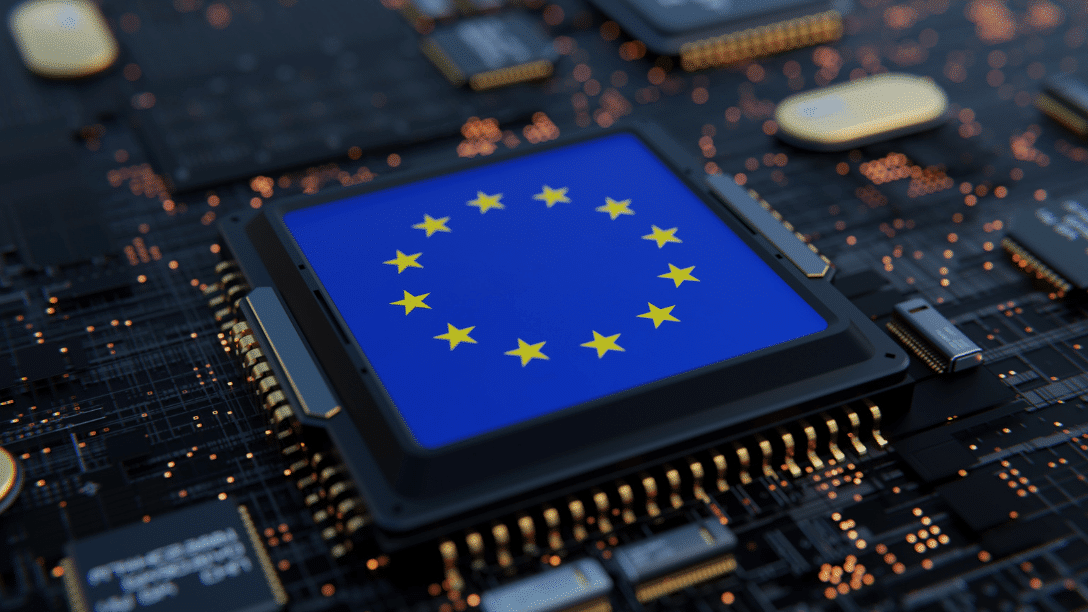
3. European chip startup Axelera wins AI factory supply deals and launches second chip
Dutch semiconductor company Axelera AI has signed multiple contracts worth tens of millions to supply chips for AI factories while launching Europa, its second generation of AI accelerators. The company says more than 600 customers are already using its technology across enterprise, security, defense, and AI factory applications.
Europa is designed for more demanding AI workloads on business servers and can be used in selected Dell and Supermicro systems. Axelera is also participating in EU-backed AI infrastructure projects in Italy and Luxembourg. Its expansion comes as the EU develops AI factories designed to give European companies and researchers greater access to the computing power needed to develop and run AI.
Why it matters for your business
The growth of European AI infrastructure is not limited to data centers or foundation models. Semiconductors are a critical part of the AI technology stack, particularly as more AI workloads move into enterprise environments. A broader European hardware ecosystem could give businesses more options for deploying AI while helping them diversify the technologies and suppliers behind their AI infrastructure.
Read more.
4. EU proposes energy rating system for data centers
The European Commission has proposed a common EU rating system to increase transparency around the energy and water efficiency of data centers. The system would cover individual facilities with a capacity above 500 kW and provide information about resource efficiency, as well as measures such as reusing excess heat and supporting clean energy generation.
The initiative comes as Europe prepares for significant growth in computing infrastructure, driven partly by AI. Data centers currently account for around 2.5% of EU electricity consumption, while EU data center capacity is expected to more than double from around 12 GW in 2025 to 28 GW by 2030. The Commission is also considering minimum performance standards, with a legislative proposal planned for 2027.
Why it matters for your business
As AI increases demand for computing power, infrastructure efficiency is becoming an important part of sustainable AI strategies. European businesses evaluating cloud, hosting, and AI infrastructure may increasingly need to consider energy and water efficiency alongside performance, cost, security, and data residency. Greater transparency could also make sustainability metrics more useful when comparing infrastructure providers.
Read more.
5. AI’s potential to fight climate change remains largely untapped
The rapid expansion of AI is raising questions about its environmental footprint. A French Senate report looks at both sides of the issue: AI could help optimize energy use, agriculture, waste management, and other climate-related activities, but the infrastructure needed to develop and operate AI also consumes significant amounts of electricity, water, and raw materials.
The report calls for greater focus on more resource-efficient approaches to AI, including smaller specialized models, more transparent information about the environmental impact of AI systems, and support for more energy-efficient AI development. It also notes that France’s relatively low-carbon electricity supply could help reduce the environmental impact of AI infrastructure hosted in the country.
Why it matters for your business
The environmental impact of AI is likely to become more important as organizations scale their use of the technology. Businesses can look beyond model performance and consider whether smaller or specialized models can deliver the required results with fewer computing resources. Tracking infrastructure choices, workload efficiency, and energy consumption can help organizations align AI adoption with broader sustainability goals.
Read more.













Comments (0)
Your email address is only used by Business & Decision, the controller, to process your request and to send any Business & Decision communication related to your request only. Learn more about managing your data and your rights.